
GUBI
Google as UBI.

During the pandemic, academics and journalists noted the emergence of UBI-tangents from the forced political action to combat the economic effects of the virus.
Academics approached the idea through anecdotal analysis of how different pandemic-induced policies were toeing the line with UBI. In Dec ’20, a paper titled “Effects of a Universal Basic Income during the pandemic” investigated a UBI experiment run in Kenya. An article published in Nature in July ’21 titled “Pandemic speeds largest test yet of universal basic income” noted the policy implemented by Spain to counteract the effects of the pandemic.
Journalists reported on the idea in a behavioral context, defined by the socioeconomic effects it produced. In May ‘21, CNN cited Jamie Dimon saying that Some Americans ‘don’t feel like going back to work,’ in June ‘21 the WEF reported 40% of employees are thinking of quitting their jobs, in Oct ‘21 CNBC published an article titled “6 reasons why Americans aren’t returning to work.”
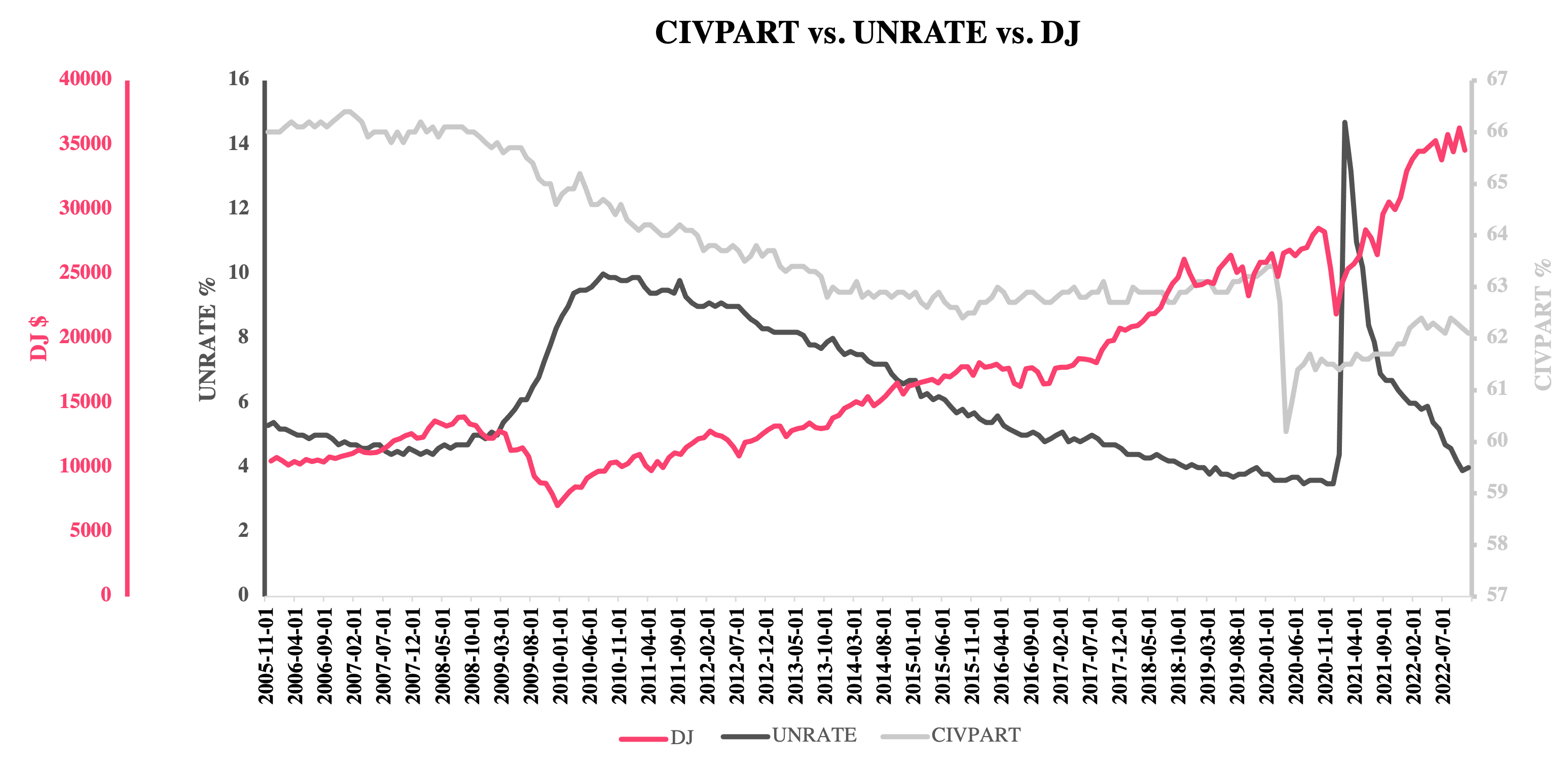
Both opportunistic accounts of the 500-year-old concept were incomplete. The academic accounts focused on the definitional aspect of UBI but ignored the effects that it generated. The journalistic accounts, in addition to being visibly wrong, defined a parameter of UBI as a product - UBI was deemed to have emerged out of an inability to work, instead of a lack of necessity to work.
True UBI only exists in the context of a massive economic surplus created from technological advancement. UBI is a tool that supplements the substitutionary effect that technology has in automating more jobs than it creates.
This substitution is not an exoneration of activity but a vector for the replacement of former undertakings with new ones.
A common counterargument to UBI is that work is required for people to derive meaning in their life. I largely find this claim overly metaphysical and blind to labor’s position in the first world. If functional utility is defined as the direct necessity of a job to support oneself, the first world has removed all functional utility from the work - self-supportive, subsistent employment is extinct. The necessity of work is now purely rooted in money (indirect), and leads to ‘work,’ as it is colloquially used, defined by salary, not activity.
This bifurcation of value and work leaves the former ungrounded. In my opinion, value is derived from the utility that an activity brings to one’s life. A doctor is preserving health, an artist in the creation of beauty, an athlete in the fulfillment of a dream. True value is the agent's perspective, not an attribution of the profession. This subjection can be rationalized independent of the context it emerges from – money or no money, if value is necessitated it will be manifested.
The semantical evolution of work realizes the conflation between value & work. Value is defined by functionality and work by money. With contemporization removing functionality from work, the maintenance of value endures the variable existence of salary.
Salary is a present necessity of work but not a requirement. Even though money and value are philosophically separated, the current condition between the two allows the former to confirm the latter. This confirmation is what makes Google the most authentic instance of UBI.
Google is the UBI experiment hiding in plain site. The contribution of the company cannot be questioned, but it is that branding that has shielded acknowledgment of the sociological effects of such an intense concentration of economic surplus.
This surplus evolved into a paradoxical provision and confirmation of value. For a company that has aired critical self-assessments regarding the productivity of its workforce, it maintains a median salary that is more than 5x that of the US. Concurrent with this asymmetry, Google encompasses the degree of costless abundance that would lead to the formation of UBI.
Associated with this composition is optionality. Many roles at the company demand relatively little responsibility, which leaves some employees to work however hard they want on whatever they want - the work at hand, side projects, or other aspects of their life.
This optionality is derived from the self-supporting function that surrounds their operations, wherein there is a massive disparity between the utility needed to maintain that which is created. The recursive efficiency of the platform has led to a retrocausality in which the evolution of the product lessened the necessity of the infrastructure built around it. The infra-accompanied bureaucratic and institutional ossification led to an absence of action on the overweight end and the subsequent emergence of a UBI-analog.
Despite it being one of the greatest companies ever built, the cultural phenomenon Google produces is not an ethos to strive for
The effects of years of surplus on Google’s corporate culture are domestically mirrored in new norms of professionalism that have overlaid America. Complacency and laziness have superimposed America’s drive for excellence and vigorous defense of the principles that underly it.
The debate of how behavior should be directed in a society where automation makes human activity de minimis to progress is one to be had, but we are not in such a state. Even though the mirage of ‘not wanting to work’ may have been false, the idea was at least thematically correct. The derivatives of the narrative – ‘reluctance to return to the office’, ‘ghost quitting’, etc. – are very much real; and, we should take the media’s second-order correctness as a serious critique of our society.
A communal softness has cloaked American professionalism – and it’s been staring us in the face the entire time.
Thank you to Benjamin Kany, Jeffrey Yatsuhashi, and James Miller for their feedback on these ideas.